Gen Alpha-friendly spaces: Retail & hospitality futures
They’ve never known a world without smartphones, streaming or voice-activated everything. But when it comes to how they want to spend their time (and their parent’s money) Generation Alpha is making a compelling case for the physical world.
Born between 2010 and 2024, Alpha is the first generation raised entirely in the age of the algorithm. Digital fluency isn’t a skill they’ve acquired, it’s simply how they exist. But being fluent doesn’t mean it’s their preference. According to research by VML, 69% of UK youth aged six to 16 say they prefer shopping in-store over online – a striking result from a cohort that has grown up with screens as their primary interface. A 2025 Razorfish study backs this up, two in three Gen Alpha respondents (66%) would pay more for something they can use in the real world over something that exists only online.
They expect more from physical retail than a simple transaction, seeing store spaces as interactive environments for creativity, discovery and social experience. For Alphas, the shop floor is a destination in its own right, not just where you go to buy something (you can do that online), but it has to earn this elevated status.
For now, their spending power is largely indirect. The oldest members of the generation are only just entering their mid-teens, and so most don’t yet have a meaningful income of their own. What they do have is influence – and they’re using it across categories from food and drink to, in some cases, which car their parents buy (Razorfish found 61% of parents said their kids had final say on which car they buy). The time to earn their trust is now, while their preferences and loyalties are still forming.
The craving for physical experience isn’t incidental either. For many in this generation, the pandemic arrived during the years when social habits and relationships with the outside world are typically established. The isolation of that period left a mark, and IRL experiences have taken on a particular emotional charge as a result. Physical retail offers something no amount of personalised digital content can replicate: a chance to be present, engage the senses, and exist in a space with other people.
For retailers and brands, the opportunity is clear but the execution demands ambition. Alphas are constantly immersed in a digital world, but they’re not looking for physical spaces that simply replicate what they can already access on a screen. Instead, they want environments that are immersive, tactile and genuinely surprising: spaces that invite exploration, reward curiosity and give them something to talk about. Think about stores and hospitality spaces as a creative playground rather than a commerce machine. The brands that build those spaces now, and build them well, will be the ones Gen Alpha chooses to grow up with.
Jellycat Airlines

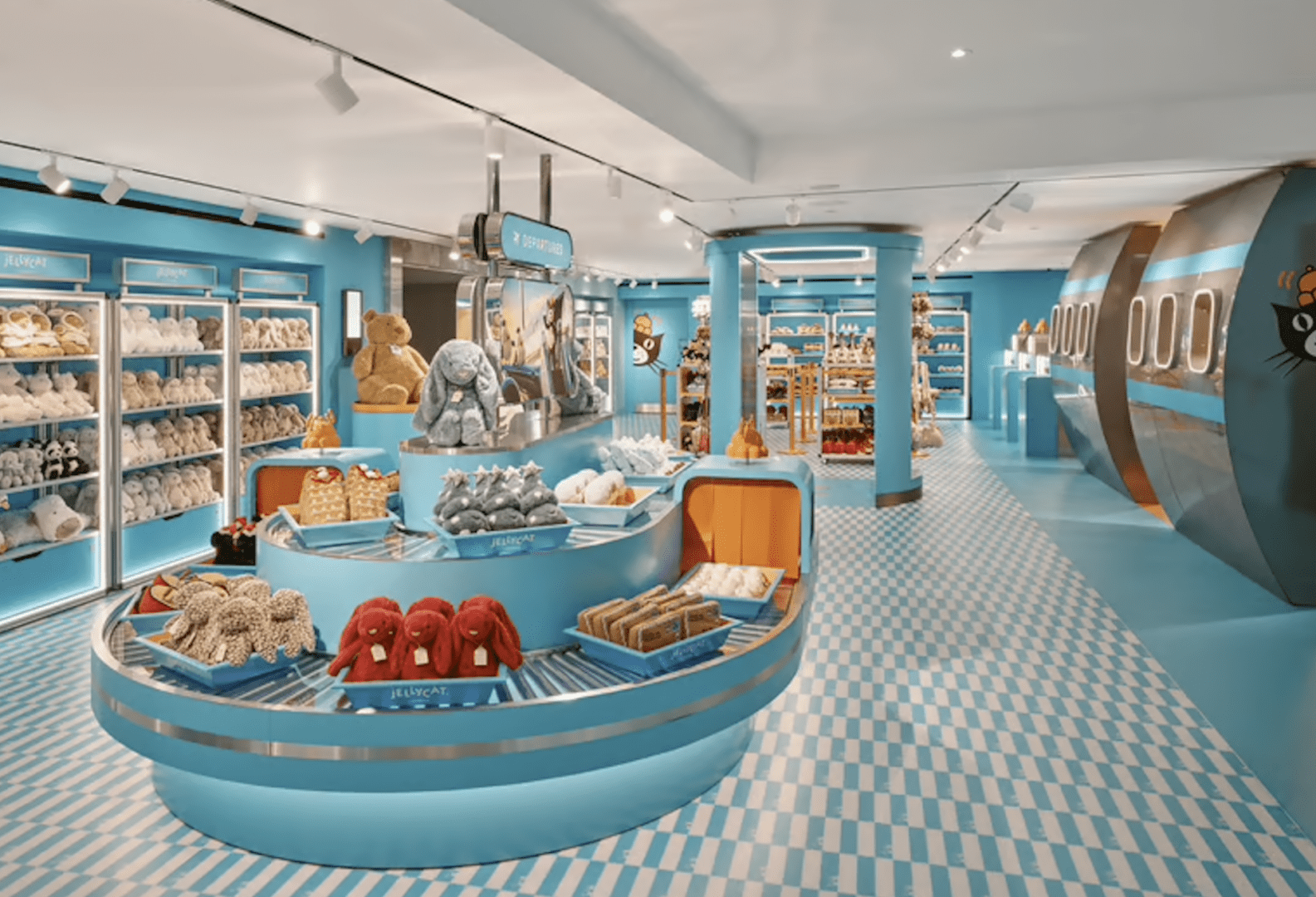
In October 2025, Jellycat opened an airport-themed pop-up at Harrods’ Knightsbridge store, transforming the fourth floor of the luxury department store into a plushie-filled terminal featuring luggage carousels, airplane cabins and checkouts designed as airport check-in counters.
The concept showcases Jellycat’s signature shade of teal (and vibrant orange accents) throughout the space, with ample opportunities to take the perfect social media snap. There’s an impressive level of attention to detail, with every aspect of the normal airport experience reimagined through the lens of the brand. Luggage carousels double up as product displays, with boxes full of plushie characters, while a full-body security scanner stars the brand’s main mascot, Jellycat himself, on the screen.
While the space looks like a pop-up, according to the brand’s website this is a permanent installation. With queues frequently extending around the block, it seems there is plenty of demand. The Harrods partnership positions the toy brand in one of London’s most prestigious retail locations, accessing both tourist traffic and luxury consumers.
Pop Mart

Cult collectible toy brand Pop Mart has opened its largest flagship store globally at Bangkok’s Iconsiam shopping mall, spanning over 760 square meters (8,180 sq ft) across two floors on the 7th level, with Thai-inspired design elements including a four-meter-tall Molly figure in traditional Chakri dress riding an elephant.
The space combines the brand’s distinctive collectibles (the best known being Labubu dolls) with a localised theme that taps into Thai heritage – “Light up Passion and Bring Joy”. Design elements include fluid curves inspired by the Chao Phraya river, glowing blind boxes and polychromatic interiors inspired by Rubik’s Cubes and temple architecture, resulting in a colourful mixture of whimsy and wonder.
The store looks to deeply integrate a sense of Thai identity through water culture references, traditional craftsmanship and inclusive design principles. Rather than a standard retail layout, visitors follow a closed-loop path that encourages exploration of every corner, without ever retracing their steps.
The flagship is a great demonstration of Pop Mart’s ability to celebrate local culture while maintaining a powerful sense of its own brand identity. It’s an immersive two-floor experience that transforms traditional toy retail into cultural entertainment.
Willow Café
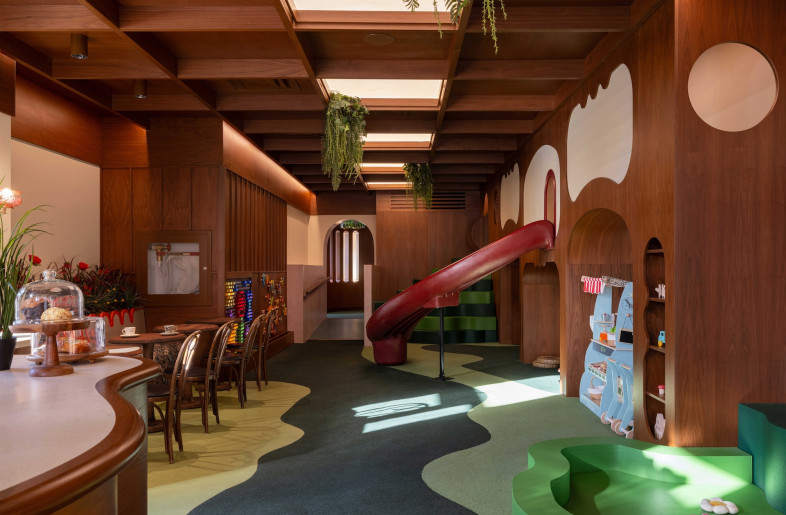
Willow Café in Toronto is reimagining family-friendly hospitality, which has long operated with the caveat that the more a space caters to children, the less enjoyable it tends to be for everyone else.
Instead, this space is designed to be genuinely immersive for children, with interactive walls and built-in zones for play and exploration, while remaining somewhere adults actually want to spend time, eschewing the usual bright primary colours and plastic furniture. Warm wood panelling and elevated décor set a tone that feels considered rather than like a compromise. Crucially, the play elements are visible without being dominant – present enough for children to find them, restrained enough that they don’t take over the atmosphere.
The design is focused on integration over segregation. Rather than corralling children into a designated zone and hoping parents can ignore the noise from a safe distance, Willow treats the family as a unit with different needs that can coexist in the same space. It’s a trickier challenge than it sounds – getting the balance right requires genuine design thinking, not just a chalkboard wall and a box of crayons near the entrance.
There’s clear commercial logic to it too. Parents of young children are an underserved hospitality audience, not because they lack spending power or appetite for quality, but because too few venues design for them as well as their kids.
Nextopia

In November 2025, Nextopia opened in Bangkok’s Siam Paragon shopping mall as a 15,000 square meter co-creation destination showcasing sustainable technologies through partnerships with 50 innovation partners, over 30 sustainability communities, and global organisations including United Nations, UNDP BIOFIN, UNICEF, WWF and the World Food Programme.auk
The space integrates breakthrough innovations into the retail environment, featuring vast solar rooftop systems delivering renewable power, radiant cooling floors, advanced air systems, and a 16-meter waterfall cooling the area while minimising energy use. Interactive elements include the space’s kinetic floor, which transforms footsteps into electricity, cycling for power generation, water bottle refilling stations and a vertical farm. There’s also the Globe, a giant LED sphere which displays real-time climate data from NASA and GISTDA.
Eco-friendly sculptures add colourful and unique design elements to the space. The Ocean Canopy is a giant sculpture which rises up through multiple floors within the space, created using recycled ocean waste by local artists. Architectural details include non-toxic speciality paints and the use of recyclable materials throughout. Similarly the Tree of Life encompasses the entrance in green, welcoming visitors in and setting the tone. The scent of pine forest is infused around the space, adding to the sense of immersion.
Visitors can earn green points by participating in the interactive exhibits. These can be exchanged for discount codes and rewards. As sustainability destinations evolve beyond education, Nextopia demonstrates how interactive retail environments can combine commerce, learning, and participation to create engaging sustainability experiences.
Boo Boo Land

Boo Boo Laand is a dedicated kid’s entertainment space at Dubai Mall that spans over 25,000 square metres, with more than 30 attractions across four zones including a (fake) snow park, targeting children from babies to teens. Ticket prices start at DH190 (£15.60)
Leaning into elaborate and fantastical interior design, the destination features activities including super slides, trampolines, a ‘football stadium’, princess dress-up areas, a racing zone and arts and crafts spaces. Additional offerings include birthday parties, Mini Chef’s Kitchen workshops, live performances, interactive shows and mascot meet-and-greets. For parents, a café and an on-site nail spa providing relaxation opportunities while children play.
As shopping centres compete to become destination experiences, large-scale family entertainment venues like Boo Boo Laand demonstrate how retail spaces can integrate leisure offerings that extend visit times and create memorable experiences beyond traditional shopping.