Coffee innovation 2026: Packaging is the new storefront

Coffee packaging is ripe for a serious rethink, and innovative new takes on standard designs are turning heads, sparking social media moments and making your daily brew feel like something truly worth celebrating.
One of the most habitual and ordinary purchases many people make each day, most coffee drinkers barely register what their order arrives in. Whether it’s a cup, a pod or a sachet, it’s just a means to an end. But a new wave of packaging innovation is looking to change that dynamic, using the vessel itself as a canvas for creativity, convenience, or even a total rethink of environmental impact. For brands and retailers operating in the saturated coffee market, these ideas are worth paying close attention to.
Turning cups into content

On-cup design can turn a routine transaction into a shareable moment. London plant-based café Cream Dream – a Ukrainian-founded brand with locations in Covent Garden and Greenwich Market – has introduced coffee cups featuring a rotating visual mechanism, where the image on the cup shifts or animates as you turn it. It’s a tactile, playful detail that invites customers to interact with the packaging rather than ignore it, and in an era when the aesthetic of your coffee order is part of the experience, it gives customers a reason to post before they’ve even taken a sip.
SLRP has taken a similarly social-first approach with its split cup format. This is a dual-compartment design that keeps two separate drinks divided in a single vessel. The concept taps into a broader appetite for choice and customisation – letting customers combine flavours, mix bases or simply share with a friend or partner – while making the physical experience feel novel. Split cups have been gaining traction on social media in recent months, with Google Trends tracking a major surge in interest through early 2026, and they represent a smart opportunity for independent cafés and speciality coffee brands to create talking-point products that distinguish them from chain operators.
Reinventing the pod
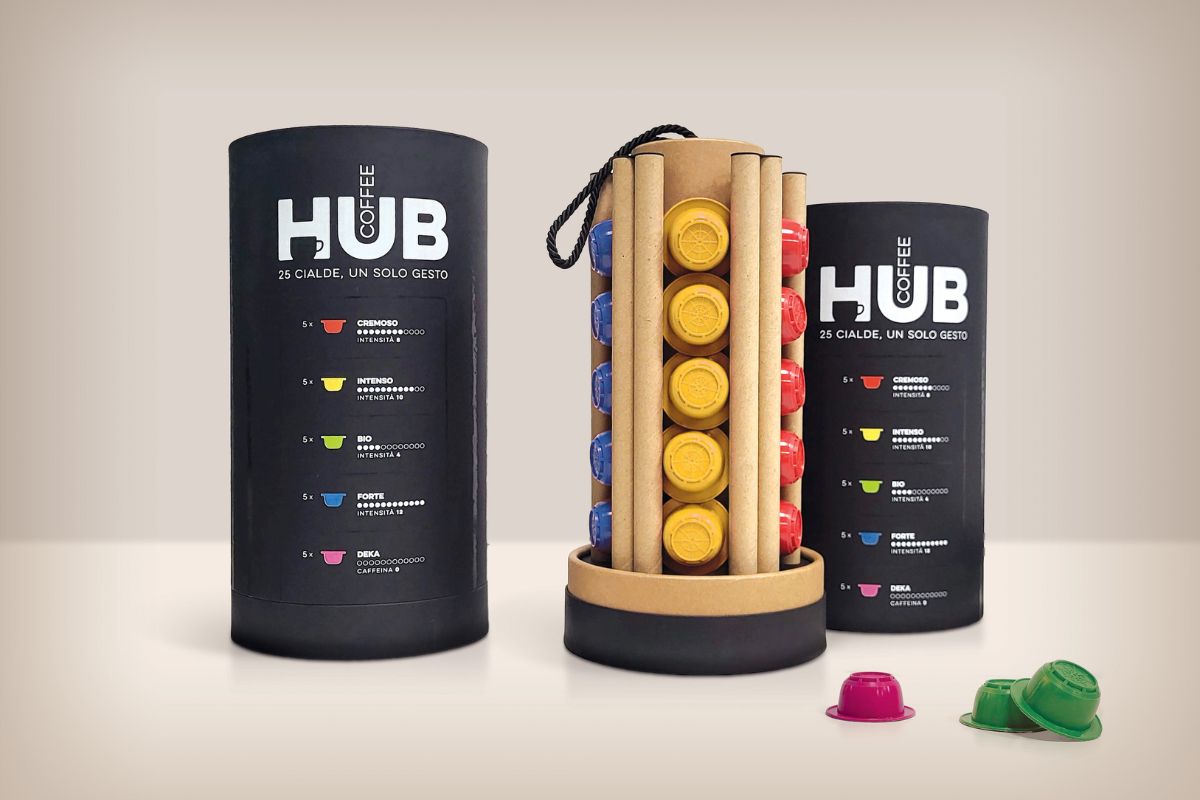
The single-serve coffee pod has been a persistent environmental problem for decades. Billions of plastic and aluminium capsules end up in landfill every year, and despite recycling schemes and compostable alternatives, the pod itself has remained the category’s most persistent liability. These two very different approaches are challenging the format.
Italian packaging specialist Tubettificio Robbiese has taken an engineering-led route with its Coffee Hub system, made entirely from cardboard with no plastic components and no composite materials – winning the Design category at Avant-Garde 2026 in the process. A central tube is flanked by five external columns organising 25 pods vertically, sorted by flavour, with each pod protected and easily accessible. Crucially, Coffee Hub is designed to be reused and refilled rather than thrown away after the first use – addressing the structural wastefulness of the category rather than just optimising for a slightly cleaner disposal chain.
Lavazza has gone further still. Its Tablì system is a 100% coffee tab (a compressed disc placed directly into a specially designed machine) that brews a single serving and leaves nothing behind that wasn’t already in the cup. Rather than retrofitting it to an existing idea, Lavazza has built the entire product around the format, marking a genuine reinvention rather than an incremental sustainability tweak.
Reinventing on-the-go

Beyond the café counter and kitchen worktop, two brands are redesigning coffee for busy on-the-go consumers. Indonesian speciality brand Tibasuka has launched its Espresso Pouch. This is a portable, single-serve liquid espresso shot in biodegradable packaging, delivering barista-quality espresso with no machine required. Simply tear open, pour and enjoy.
No Normal Coffee has taken a different tack, packaging its coffee paste, a freeze-dried alternative that preserves more of the original flavour profile, in a 100% recyclable aluminium tube. The format is compact and robust enough for hiking or camping, addressing a gap in the market: freeze-dried sachets are light and portable but sacrifice flavour, while small drip brewers preserve flavour but are too bulky for most backpacks. The aluminium tube lands between the two, with strong shelf presence and a distinctive aesthetic that reads as premium rather than functional compromise.
What this means for brands and retailers
The direction of travel is clear. Packaging is no longer a passive container – it’s a touchpoint for brand expression, a driver of social sharing and increasingly a front line in sustainability credibility. The most interesting moves in coffee right now are treating the cup, pod or pouch as a design brief in its own right, not an afterthought. For food and drink brands operating in this crowded space, consider how your packaging can play double duty and become a vessel for innovation, social clout and eco impact, as well as a morning brew.